There’s a cycle in local SEO that repeats itself every few years. Someone declares citations dead, agencies quietly deprioritize them, and then — gradually, without fanfare — the evidence piles up that it was a mistake. We’re in one of those moments right now, except this time the stakes are higher.
Citations didn’t disappear. The people paying attention to them just got quieter.
Let’s rewind to why citations existed in the first place. A mention of your business name, address, and phone number on an external site — that’s it. That’s the whole thing. No secret formula. The reason it ever mattered is the same reason it still matters: search systems, whether they’re traditional crawlers or something newer, are trying to answer a basic question. Is this business real, and can we trust what we’re seeing about it?
That question hasn’t changed. What’s shifted is how it gets answered.
Where Search Has Moved
Traditional search rewarded links. More links, better links, rankings improve. It was a flawed system in plenty of ways, but the logic was at least straightforward.
Generative and AI-powered search doesn’t work on that logic. These systems aren’t tallying backlinks — they’re looking at patterns across sources. Repetition. Agreement. Whether ten different places on the internet are telling the same story about a business. Whitespark’s 2026 Local Search Ranking Factors research made this concrete: three of the top four factors for AI search visibility were citation-related, specifically expert-curated “Best of” lists, presence on industry-relevant domains, and unstructured mentions across news, blogs, and association sites.
Mentions without links are now doing work that only links used to do. That’s a meaningful shift.
The Quiet Cost of Neglect
Here’s where it gets uncomfortable for a lot of agencies and in-house teams. If citations were deprioritized for a few years — which was common advice for a while — the damage isn’t always obvious. It accumulates.
An old address still indexed on a directory no one’s logged into since 2021. Two listings for the same location with slightly different phone numbers. A business name formatted four different ways depending on which platform you’re looking at. These things don’t announce themselves. They just sit there, creating friction.
In traditional local SEO, inconsistent citation data slows you down. In AI-driven search, the stakes are higher. These systems are cautious by design. When data conflicts across sources, they don’t take a guess — they pull back. A business that can’t be confidently verified simply won’t be recommended. Not penalized, just absent. Which is its own kind of problem.
Citations as Trust Infrastructure
The framing that makes most sense to me is thinking about citations the way you’d think about infrastructure. Not exciting. Rarely visible. But if it’s weak, everything built on top of it is compromised.
Your Google Business Profile is stronger when your data is consistent across the web. Your reviews carry more weight when they’re attached to a listing that looks credible everywhere it appears. Your content marketing lands differently when the entity behind it is well-documented across authoritative sources. None of this is theoretical — it’s just how trust compounds over time.
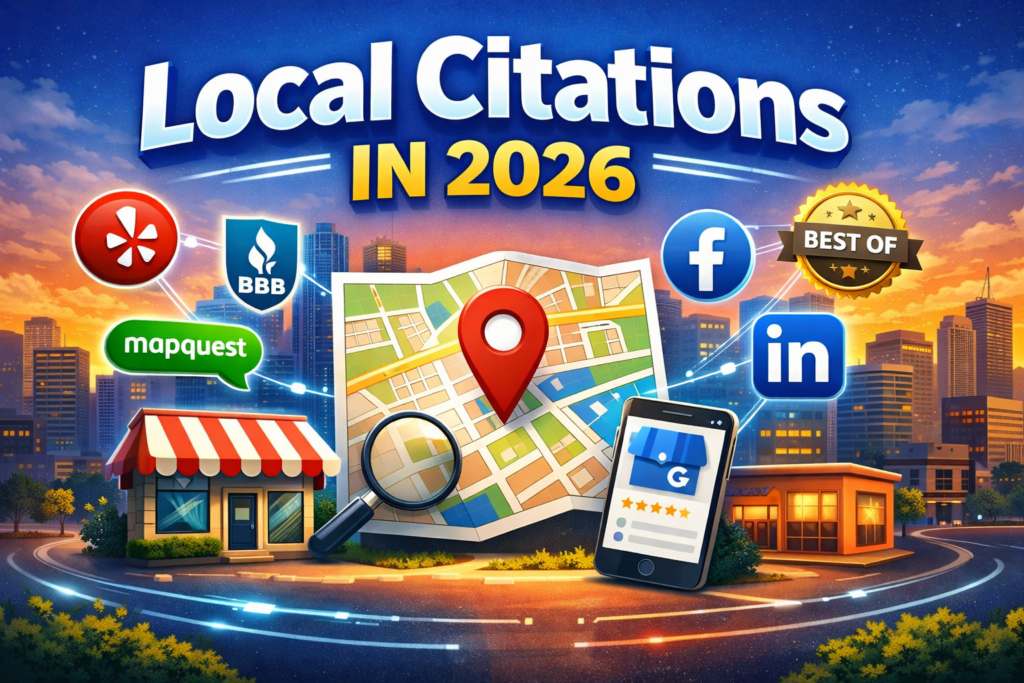
The platforms that matter most haven’t changed dramatically. Google Business Profile, Yelp, BBB, Facebook, LinkedIn — these are still the core. Apple Maps and Bing Places get overlooked constantly, which is shortsighted because they feed data into other systems. And industry-specific directories have always been undervalued. A contractor listed on trade association sites, a healthcare provider on relevant medical platforms — that contextual relevance carries real weight now, arguably more than it used to.
“Best Of” lists deserve a specific mention because they’re doing something the others aren’t. They include context: location, service category, often qualitative description. That’s exactly what AI systems are parsing when they construct recommendations. A business that appears on a legitimate “Best contractors in [city]” list is giving those systems something useful to work with.
What Actually Changed vs. What Didn’t
Consistency still matters — probably more than ever. Duplicates still cause problems. Volume for its own sake was always a bad strategy, and it’s more obviously bad now. The directories that existed purely to inflate citation counts never provided much real value, and that hasn’t improved.
What has shifted is that the context surrounding a citation has become more important than the citation itself. A mention on a well-regarded industry association site, with a sentence or two describing what the business actually does, is worth more than ten generic directory entries with a name and phone number and nothing else. Anchor text used to drive a lot of the value in this space. Context and source authority are doing more of that lifting now.
Who’s Actually Fine Right Now
If you’ve maintained citation consistency over the years — kept NAP data clean, dealt with duplicates when they surfaced, stayed active on the platforms that matter — there probably isn’t much remediation needed. The foundation is there.
The businesses and agencies in a harder spot are the ones who bought into the “citations are dead” narrative a few years back and let things drift. Not because anything catastrophic happened, but because the drift compounds. Six months of neglect is manageable. Two or three years of it means an audit and a cleanup campaign before anything else makes sense.
The honest version of where local citations stand in 2026 isn’t a comeback story. It’s more of a recognition that they were load-bearing the whole time, and some people stopped noticing until the cracks showed.