Edit Template

Using LLMs for Local Citations: A Practical, Human-Led Approach

Ric Sampang

Local citations have always been about consistency, accuracy, and trust. While tools and automation have come and gone over the years, the core challenge hasn’t changed: making sure business information is correct everywhere it appears—and stays that way.

Recently, Large Language Models (LLMs) have entered the conversation. Some marketers immediately associate them with automation, content spinning, or risky shortcuts. In reality, when used correctly, LLMs can strengthen citation workflows without replacing human judgment or violating directory guidelines.

This article explains how LLMs can be used responsibly for local citations, using a manual, step-by-step process that supports accuracy, reduces errors, and scales cleanly for agencies and SEO teams.

When done correctly, citations strengthen your local presence. When done carelessly, they can create inconsistencies that hurt rankings and credibility. Below is a transparent look at how we approach citation building—from intake to verification—with accuracy as the priority at every step.

What LLMs Are (and Are Not) in Citation Work

An LLM is best thought of as a language analysis assistant. It’s very good at:

  • Cleaning messy text
  • Identifying patterns
  • Standardizing formatting
  • Flagging inconsistencies

It is not something that should:
Automatically submit citations

  • Create accounts on directories
  • Invent business details
  • Operate without human review

The safest and most effective use of LLMs in local SEO is before and after submission, not during it.

The Core Idea: One Intake, One Process, One Source of Truth

At the heart of a good citation campaign is a single concept: a canonical version of the business’s data.

LLMs help you get there faster and with fewer mistakes.

Instead of manually cleaning intake forms, rewriting descriptions, and double-checking categories, you can use an LLM to assist with preparation—then let humans handle submission and validation.

Step 1: Start With Raw Client Intake (Even If It’s Messy)

Clients rarely send clean data. You’ll see:

  • Inconsistent business names
  • Multiple phone numbers
  • Long, promotional descriptions
  • Mixed formatting

This is exactly where an LLM helps.

What you do

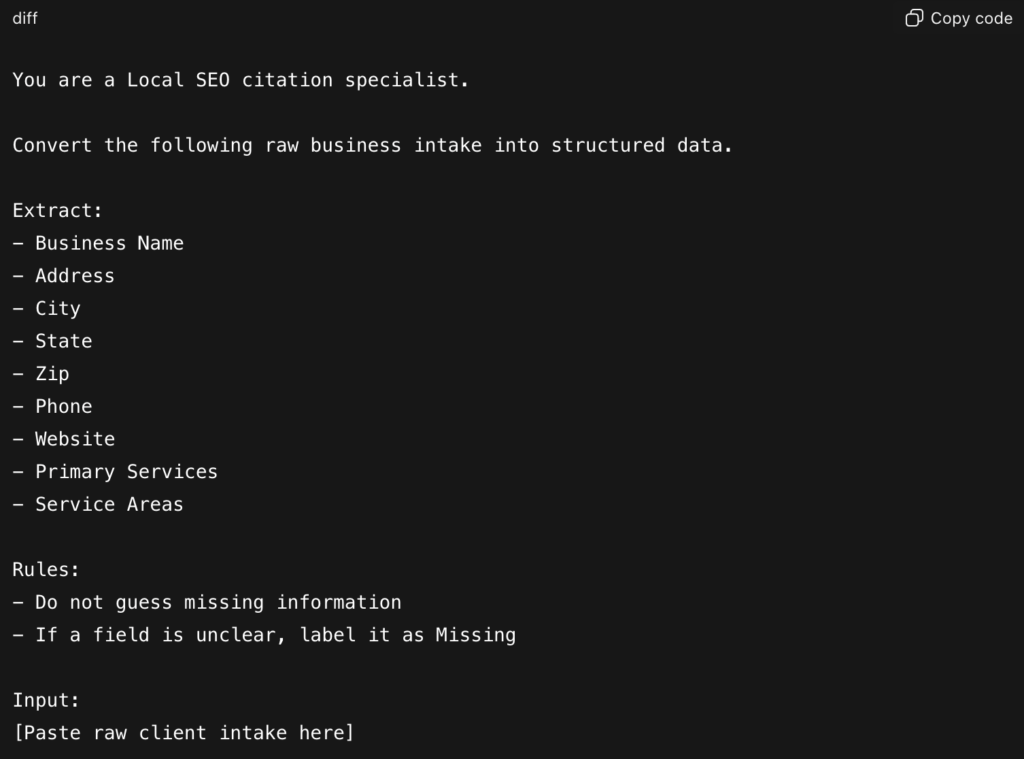
Paste the raw intake exactly as received—no editing.

What the LLM does

  • Extracts key fields
  • Keeps original meaning

Flags missing or unclear information

Sample prompt

Example output (shortened)

  • Business Name: ABC Pressure Washing LLC
  • Address: 123 Main St
  • City: Tampa
  • Phone: Missing
  • Primary Services: Pressure washing, roof cleaning

At this stage, nothing is submitted anywhere. You are simply organizing reality.

Step 2: Create the Canonical NAP (The Most Important Step)

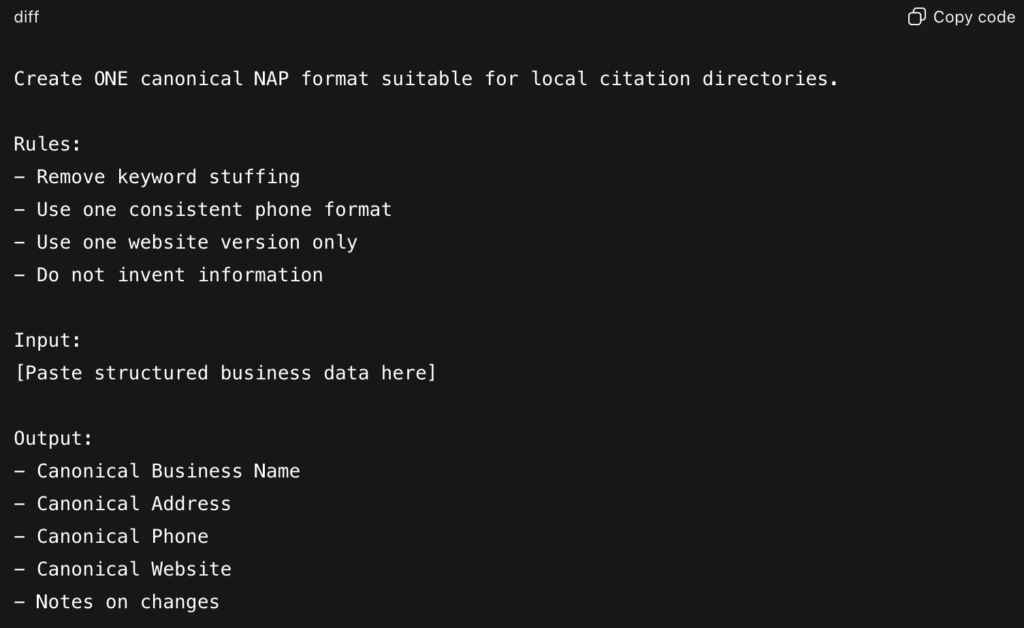
Once the data is structured, the next goal is to create one approved version of the business name, address, phone number, and website.

This version becomes your single source of truth.

What the LLM helps with

  • Removing keyword stuffing from business names
  • Normalizing address formatting
  • Choosing one phone number format
  • Selecting one website version

Sample prompt

Why this matters

Most citation issues later on—duplicates, suspensions, cleanup campaigns—come from skipping this step or doing it inconsistently.

Step 3: Category Mapping Without Over-Optimization

Directories don’t all use the same categories. Choosing categories manually is time-consuming and often inconsistent across team members.

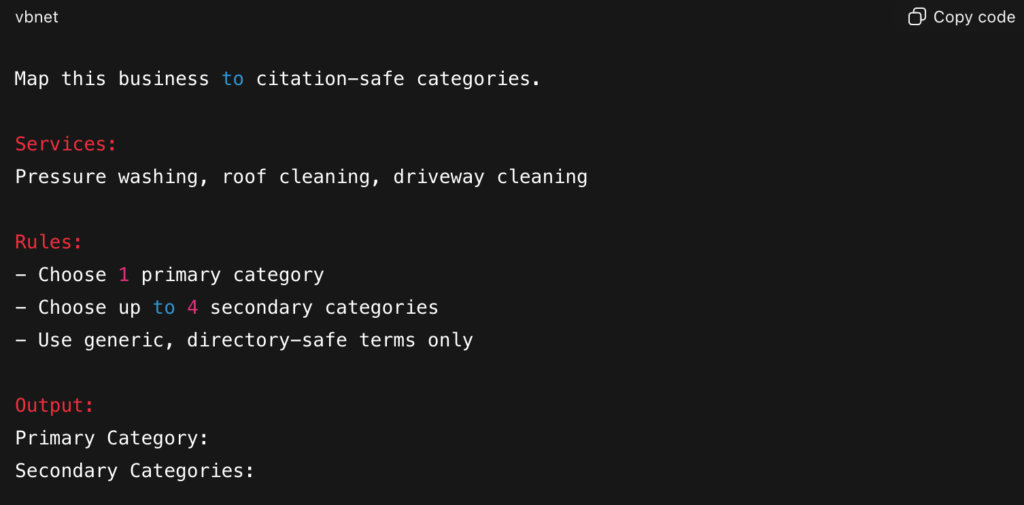
LLMs can help map services to safe, generic categories without keyword stuffing.

Sample prompt

The final category choice should still be approved by a human, but the LLM dramatically speeds up this step.

Step 4: Writing Citation Descriptions Without Footprints

One of the most common mistakes in citation building is either:

  • Reusing the same description everywhere, or
  • Creating a unique, over-optimized description for every site


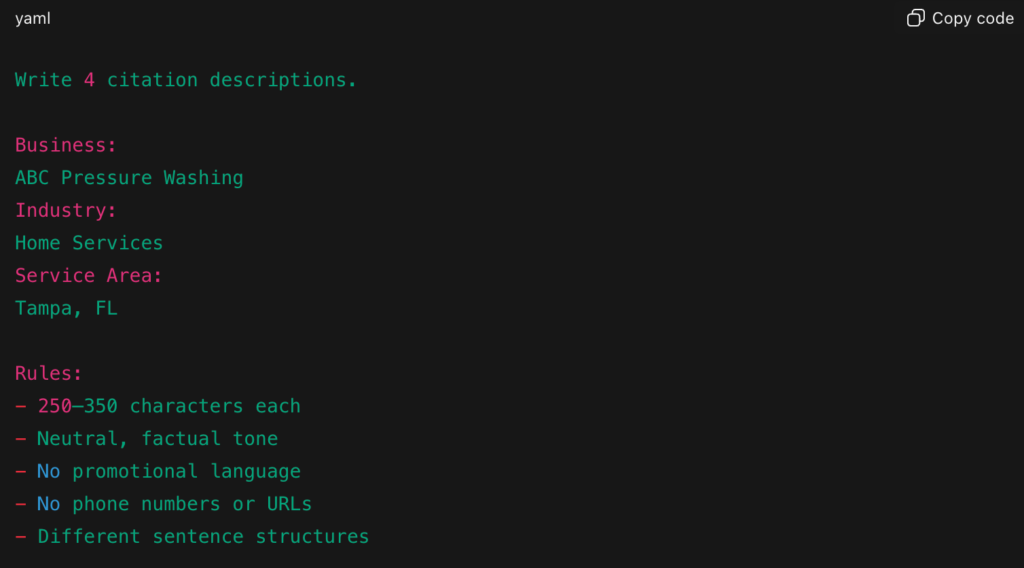
A safer middle ground is to create a small set of neutral description variants and rotate them.

Sample prompt

Example description excerpt

ABC Pressure Washing provides exterior cleaning services for residential and commercial properties in the Tampa area. Services include pressure washing, roof cleaning, and surface maintenance, with a focus on safe methods and consistent results.

These descriptions are informational, not sales copy—and that’s intentional.

Step 5: Human Submission (Always Manual)

This is where many people are tempted to over-automate.

LLMs should not:

  • Log into directories
  • Create listings
  • Verify businesses

At this stage, your team or VA:

  • Uses the canonical NAP
  • Applies approved categories
  • Rotates descriptions

This keeps the process compliant and predictable.

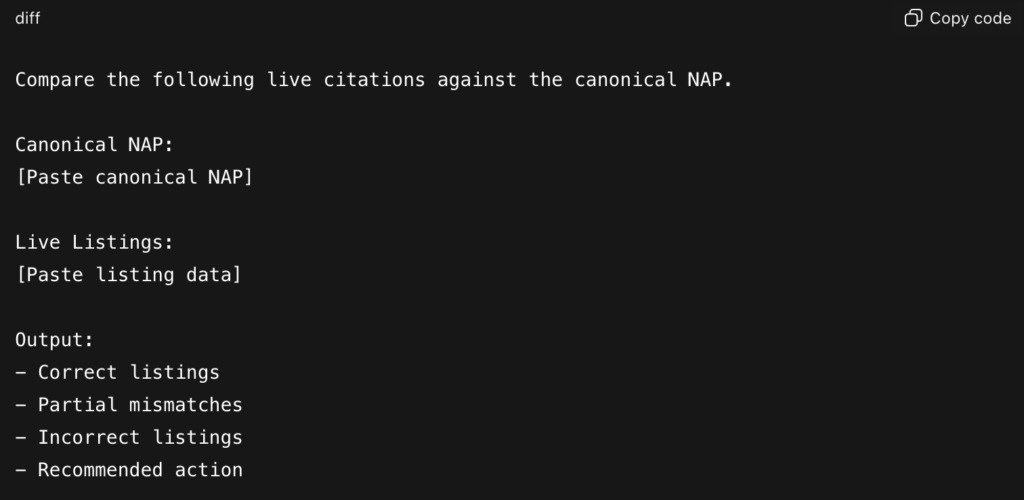
Step 6: Post-Submission QA and Cleanup Support

After submissions are live, LLMs can help again—this time with quality control.

You can paste live listing data and compare it against the canonical NAP to quickly spot:

  • Partial matches
  • Old phone numbers
  • Formatting issues

Sample prompt

This is especially useful for cleanup campaigns and ongoing maintenance.

Why This Approach Works Long-Term

This LLM-assisted model works because:

  • Humans remain responsible for decisions
  • Data accuracy improves before submission
  • Errors are caught earlier
  • Cleanup costs go down over time

Most importantly, it aligns with how local search ecosystems actually work: slowly, cautiously, and with an emphasis on trust.

Final Thoughts

LLMs are not a replacement for citation strategy. They are a multiplier for good processes.

Used responsibly, they help agencies:

  • Scale without chaos
  • Train teams faster
  • Reduce rework
  • Deliver cleaner results to clients


The future of local citations isn’t automation for automation’s sake. It’s better preparation, better review, and fewer mistakes—and that’s exactly where LLMs fit best.

Ric Sampang

Ric is the Head of Operations at Online Crib and a seasoned Local SEO and Local Citation specialist, overseeing the delivery of scalable white-label services for agencies worldwide. With deep expertise in citation audits, citation building, and cleanup campaigns, he focuses on improving local search visibility through accurate NAP management, efficient workflows, and strict quality control. Ric is known for his practical, results-driven approach to local SEO operations, helping agencies achieve consistent rankings and long-term growth.


Share Your Thoughts

Your email address will not be published. Required fields are marked *

Sign up for our Newsletter

Stay ahead in local SEO with fresh news, expert research, and actionable tips delivered right to your inbox.

You have been successfully Subscribed! Ops! Something went wrong, please try again.

© 2025 , Online Crib , All Rights Reserved

Edit Template